Showing posts with label Karzai. Show all posts

Monday, 17 March 2014

NATO and Tribal Elements in Afghanistan

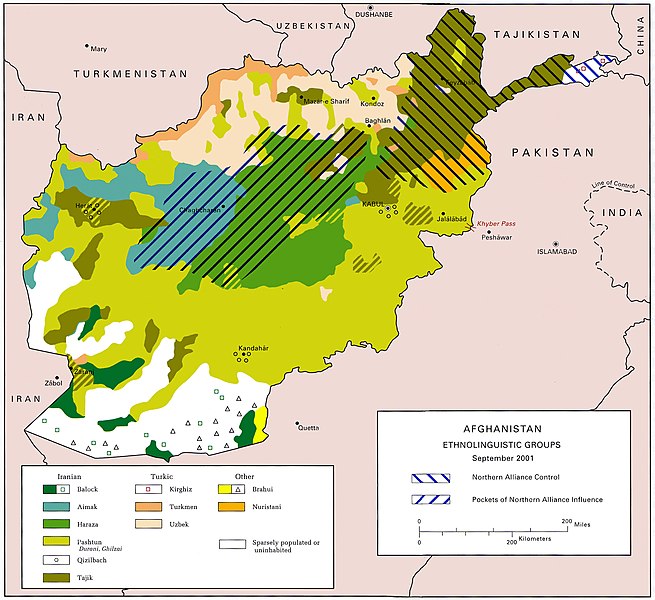
For the media to portray Afghanistan in a manner easily understood by a wider audience they must inevitably reduce the complexities of the local and tribal relations to broad locations and groupings. For instance, stating that the Pashtuns largely occupy the south of Afghanistan and the north of Pakistan; whilst the Haraza, Aimak, Uzbek, Tajik, and Uzbek occupy the North. This is overly simplistic as shown by this map:

Note the pockets of Pashtun throughout the North (The light green colour if it is hard to see)

(The Pashtun pockets originate from the rule of Amir Abdur Rahman who uprooted many tribal communities with the goal of strengthening the central government and deliberately weakening the tribal system. He was a Pashtun himself but he resettled various Pashtun tribes and subtribes as punishment for rebellion or to use them as counterweights against hostile non-Pashtun tribes or ethnic groups.)

On the one hand, rather than analysing local tribal factors, it is this broad understanding that NATO and Afghan government forces have based their counter-insurgency policy upon. The work of Robert Gonzalez reiterates this understanding as he contends that a misguided focus on the ‘tribal’ features of Afghanistan is drawn from the ‘desperate political situation’ to identify a source of insurgency that may be rapidly resolved – tribes are ‘imagined’ collections of individuals.

Yet, this argument fails to appreciate the patrilineal segmentary lineage systems that operate in these regions for the ‘social structure of communities is based either on the tribe or the locality’ which unites together if faced by an external threat.

On the other hand, the Taliban use their pre-existing knowledge of tribes, subtribes, and clans to convince the tribes to co-opt and recruit local leaders who can convince their men to fight. The Afghan government has only served to deepen and strengthen this tactic through mismanagement, patronage, and corruption of local strongman not necessarily linked to the quam, a unit of identification and solidarity that could be based on kinship, residence, or occupation.

This is combined with an image of the U.S. and NATO that is at its lowest point since 2001 making the mobilisation of tribes on their side more unlikely.

Ergo, the US and NATO considered the Pashtun as a whole and failed to comprehend the vast web of tribes allowing the Taliban insurgency to rise within the population.

Thursday, 13 February 2014

Karzai Renegades on Allied Support

Two prisons both central to concerns over human rights. One prison released its inmates against American wishes and one prison holds 166 detainees despite being the focus of an executive order.

What is all this about?

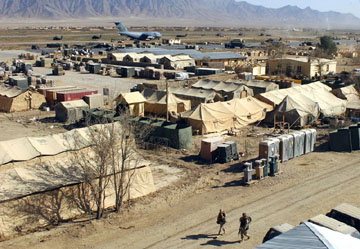
In the news today 65 detainees of Bagram prison have been released by the Afghan government. Bagram has often been described as the Guantanamo Bay of Afghanistan and contains the alleged troop commanders, bombers and other notables of the Taliban forces. With the upcoming Afghan elections on the 5th April it is worth considering why Karzai has done this? It has affected the relationship between the American and Afghani government. So was it all worth it?

Discussion over Afghanistan's future centers on whether the Taliban will regain control of the region. Karzai is aware of the threat the Taliban hold and therefore seems to be edging away from the Americans to secure the progression he has made.

A few factors support this:

1. Karzai has backed away from signing the Bi-Lateral Security Agreement in November as he wishes to forestall it till after the next elections. Yet, this contradicts the Loya Jirga, a grand assembly of elders, who approved of the agreement and asked Karzai to sign it as soon as possible. The rational behind his refusal to engage in this agreement is likely linked to the calls by the Pashtun to take a harder stance against the Americans.

2. Aid is another concern. After skimming through the book 'War Front to Store Front' by Paul Brinkley I was surprised to learn that 60% of the GDP of Afghanistan is foreign aid, 30% is from the narcotics trade, and 10% is economic activity. Drawing conclusions from these figures, I consider Karzai to be concerned about is whether the government he leaves behind will function without American backing. If American backing is pulled from Afghanistan and the government is wholly reliant on it then it will collapse. Karzai is attempting to make the government independent from America to encourage other sources of economic support and growth.

Bagram is another disagreement between Karzai and America
What makes this situation challenging for Allied Forces is that they are unable to logistically plan for the future of Afghanistan. Do we continue to fight to secure what we have gained or do we except that we have lost the fight and leave it to the Afghan people to dictate their future? Will Karzai's attempt to distance his government from America help weakening his government and enabling the Taliban to gain further control?

Finally, how can America be so committed to removing Guantanamo Bay but then condemn Karzai's decision to close Bagram? Human rights and the hypocrisy we often breed is concerning.