With the departure of troops from Afghanistan intended for
2014 and David Cameron’s recent trip to Camp Bastion to declare, or rather
infer, ‘mission accomplished’ it seems Afghanistan is finally over.
Yet, the media was quick to draw parallels between G. W.
Bush’s speech aboard the USS Abraham Lincoln on Iraq in 2003 due to their
disbelief that coalition forces have managed to secure any of their objectives.
They were not far off the truth.
 |
| Soldiers appear bemused? |
The objectives were to:
Disable Al Qaeda
Yes, Mr. Cameron you have the right to fist bump the air as Coalition forces did disable Al Qaeda within
their area of operations. However, Al Qaeda typifies a new form of actor on the
international stage, one that does not have a set piece of land. Therefore,
capturing a certain town or a capital will not destroy it as it is the ideology
and the people which embody the organisation. To destroy this it will take
localised actors, a shift in ideology or a reconciliation process. None seem
likely.
Disable the Taliban
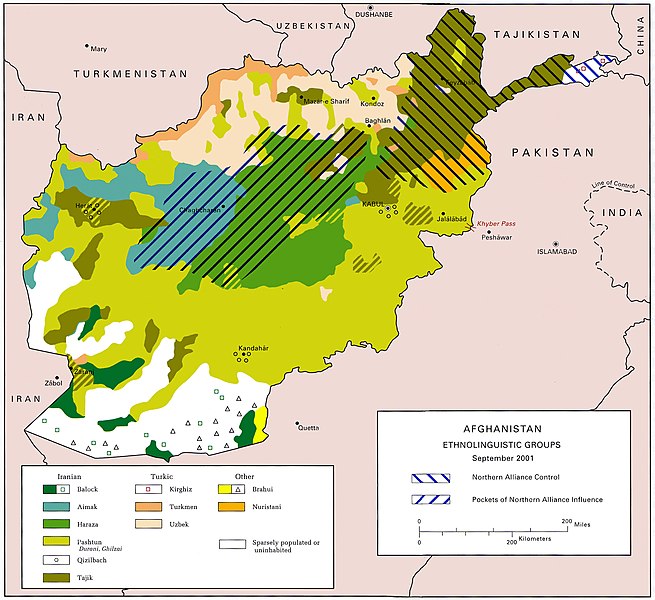
Driving the Taliban from Afghanistan is difficult. The
Taliban, like Al Qaeda, are now partially removed from a certain spatial space.
Yes, you can predominately find them in the south of Afghanistan but that is
simply because they are predominately Pashtun and gain support from Pakistan.
Moreover, Pakistan presents another issue as the Pashtun constitute the
majority within the northern regions. This makes it easier for Taliban fighters
to cross the border but coalition troops cannot as it violates the independent
statehood of Pakistan. Finally, the villagers are reluctant to inform on the
Taliban as they fear reprisals as Coalition forces wind down their processes.The Taliban’s Qatar office which was seen as an embassy for a government in waiting accentuates the point. Likewise, when Coalition forces arm villager defense forces against the Taliban they often end up being shot by the same weapons they gave out the week before.
The belief that the Taliban are slowing their attacks or waiting till Coalition forces pull out is unfounded. We just are not hearing about the attacks because it is the Afghan National Army that are taking the brunt of the fighting.
This
article by the BBC talks in-depth about village defense forces and the arguments for and against them.
 |
| Militias have had little success. Credit: BBC |
Additionally, more Taliban attacks have started to occur in the Western and
Northern areas of Afghanistan which are typically seen as safe areas for the
Karzai government. It is likely that the Taliban are trying to suggest that
Karzai has a lack of control over the whole state. He personally agrees,
stating that:
“The entire NATO exercise was
one that caused Afghanistan a lot of suffering, a lot of loss of life, and no
gains because the country is not secure.”
There goes the whole ‘mission
accomplished’ rhetoric… put your fist down Mr. Cameron.
(Important to note that when I refer to the Pashtun I am not stating they are
all Taliban but that the Taliban are mainly of Pashtun or external origin).
Drug Prevention
This seemed to be an objective at the beginning of the
campaign however it has declined as this year saw a bumper crop of poppies in
Afghanistan. 6000 tons, the biggest since the invasion began, was harvested.
Conversely, Afghanistan’s 2000 drug eradiction program under
the Taliban was highly effective with production falling to 185 tons in 2001
compared to 3300 tons in 2000. It was
even acknowledged at the October 2001 session of the UN General Assembly though
since the war started the Coalition has been keen to distance itself from this.
Yet, the reduction in opium did have detrimental outcomes
for the farmers as they struggled to feed their families. Wheat needs more
water and earns no money until it is sold. The opium trade gave the money up
front.
See this
article for more information.
Create a stable and loyal Afghan National Army (ANA)
Yes, no, maybe?
Well some ethnic and political faction leaders have begun to revive their
militia forces should the international drawdown lead to a major Taliban push
to retake power. Successful? Erm, no?
This was illustrated in a November 2012 meeting organized by
Herat leader Ismail Khan, in which he reportedly began taking steps to
reorganize his Soviet and Taliban-era militia. Vice President Muhammad Fahim
has also discussed potentially renewing the Northern Alliance force in anticipation
of the need to assist Afghan government forces against the Taliban. And Uzbek leader
Dostam is also reportedly trying to reorganize his loyalists in northern Afghanistan.
These and similar moves could spark ethnic and communal conflict from an
all-out struggle for power and a reversion to Afghan rule by faction leaders
rather than elected leaders.
 |
| US forces training the Afghan National Army. |
Do armies even work in a clan based societies?
Armies need to be centred on a shared common identity and a
goal. At present the ANA comprises of Afghans from the North with the goal
of fighting the Taliban south. The title is misleading as it is not a national
force, rather what resembles the Northern Alliance with a few new toys courtesy
of the coalition.
For a rather stimulating and patriotic history of the Taliban and what the Americans have done about it read this:
So moving on to 2014 about 8,000 to 12,000 American trainers and Special Forces
will remain in Afghanistan alongside with 5,000 coalition forces. Clearly some
way to go and that means that not all forces are pulling out. It is one of those "we said we would pull all the troops out but then..."
In the realm of international politics that is sort of understandable.
Provide proficient Aid
This article would not fit in to my blog if I did not
discuss aid. But, it is kind of the same story again - I'm really noticing a trend.
The aid is going through the governments of Kabul and thus
the people are being told what they need!
Only in 2008 did the UK gov ask the people what they wanted
and were truly shocked by the answer that came back.
And if you prefer to listen to all the arguments surrounding Afghanistan listen to reliable
Ben talking to VICE. Good discussion on women rights and the views of a typical Afghan villager.
Thoughts welcome as always.